


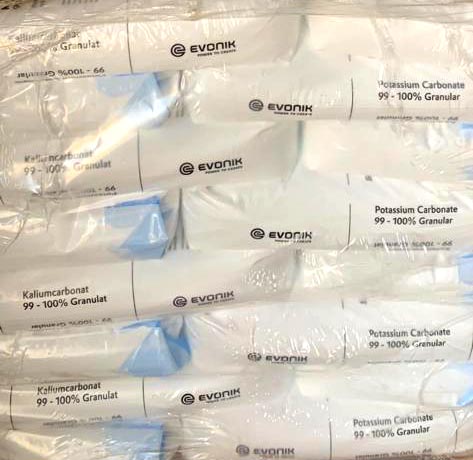
light sodium carbonate
Sodium carbonate, Na2CO3, (also known as washing soda, soda ash and soda crystals) is the inorganic compound with the formula Na2CO3 and its various hydrates. All forms are white, water-soluble salts. All forms have a strongly alkaline taste and give moderately alkaline solutions in water. Historically it was extracted from the ashes of plants growing in sodium-rich soils. Because the ashes of these sodium-rich plants were noticeably different from ashes of wood (once used to produce potash), sodium carbonate became known as “soda ash.” It is produced in large quantities from sodium chloride and limestone by the Solvay process.
Main applications
In terms of its largest applications, sodium carbonate is used in the manufacture of glass, paper, rayon, soaps, and detergents.
Related products
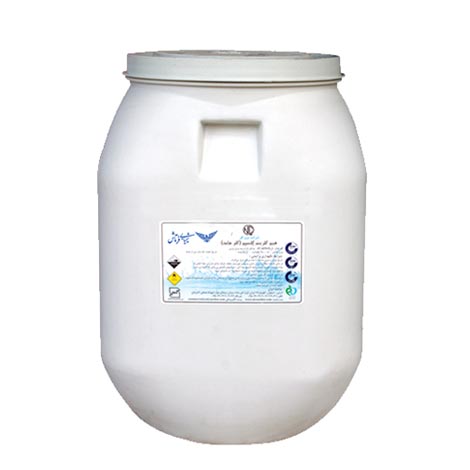
Calcium hypochlorite Esfahan 45 kg
Calcium oxychlorides
A confusion sometimes reigns between calcium oxychlorides and calcium hypochlorite. Indeed, the name calcium oxychloride (or calcium hydroxychloride) does not immediately refer to calcium hypochlorite, but is only applicable to the mixed calcium basic chloride compounds remaining unreacted in the bleaching powder, such as, e.g. CaCl2 · 2 Ca(OH)2.
Calcium oxychloride may also be formed in concrete in roads and bridges when calcium chloride is used as deicing agent during winter. Calcium chloride then reacts with calcium hydroxide (portlandite) present in cement hydration products and forms a deleterious expanding phase also named CAOXY (abbreviation for calcium oxychloride) by concrete technologists. The stress induced into concrete by crystallisation pressure and CAOXY salt expansion can considerably reduce the strength of concrete.
Chemical properties
Calcium hypochlorite exhibits both acido-basic and oxydo-reduction properties. It is a relatively strong base.
Calcium hypochlorite solution is basic as the hypochlorite anion can accept a proton from a water molecule leaving a hydroxyُl anion in solution. This basicity is due to the propensity for the hypochlorite anion to accept a proton to become hypochlorous acid, a weak acid:
- ClO− + H2O ↔ HClO + OH−
The hypochlorite anion is also a strong oxidizing agent containing a chlorine atom at the valence I (redox state: Cl+1) which reacts under acidic conditions with the reduced chloride species (Cl–, here the reducing agent) present in hydrochloric acid to form calcium chloride, water and gaseous chlorine. The overall reaction is:
- Ca(ClO)2 + 4 HCl → CaCl2 + 2 H2O + 2 Cl2
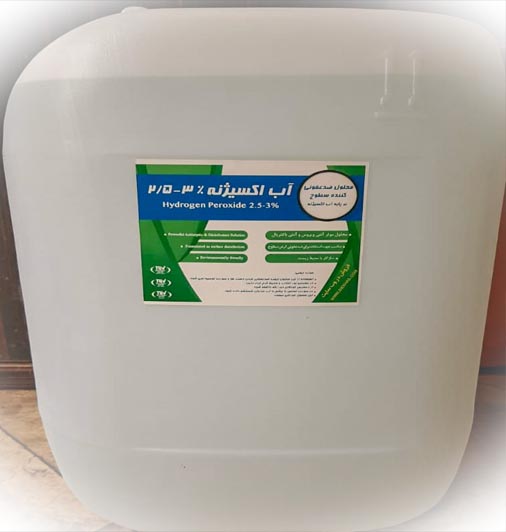
Hydrogen Peroxide
Hydrogen peroxide is a chemical compound with the formula H 2O 2. In its pure form, it is a very pale blue liquid, slightly more viscous than water. Hydrogen peroxide is the simplest peroxide (a compound with an oxygen–oxygen single bond). It is used as an oxidizer, bleaching agent, and antiseptic. Concentrated hydrogen peroxide, or "high-test peroxide", is a reactive oxygen species and has been used as a propellant in rocketry. Its chemistry is dominated by the nature of its unstable peroxide bond.
Hydrogen peroxide is unstable and slowly decomposes in the presence of light. Because of its instability, hydrogen peroxide is typically stored with a stabilizer in a weakly acidic solution in a dark coloured bottle. Hydrogen peroxide is found in biological systems including the human body. Enzymes that use or decompose hydrogen peroxide are classified as peroxidases.
Properties
The boiling point of H2O2 has been extrapolated as being 150.2 °C (302.4 °F), approximately 50 °C (90 °F) higher than water. In practice, hydrogen peroxide will undergo potentially explosive thermal decomposition if heated to this temperature. It may be safely distilled at lower temperatures under reduced pressure
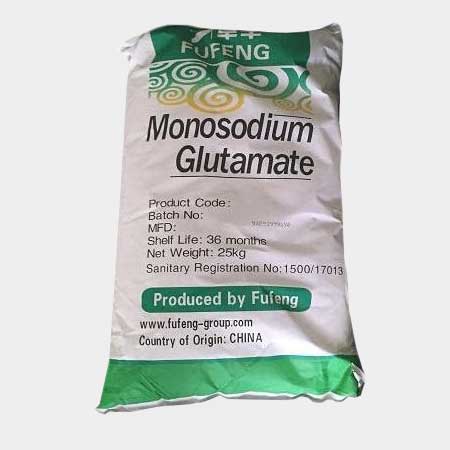
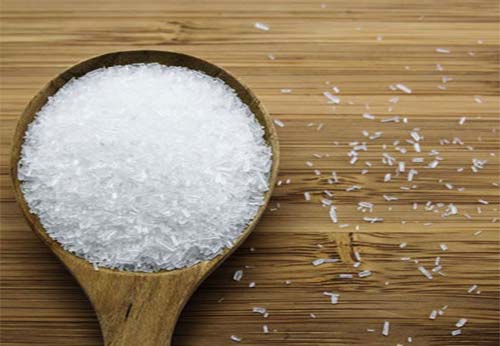
Monosodium glutamate
Monosodium glutamate (MSG), also known as sodium glutamate, is the sodium salt of glutamic acid. MSG is found naturally in some foods including tomatoes and cheese. MSG is used in cooking as a flavor enhancer with an umami taste that intensifies the meaty, savory flavor of food, as naturally occurring glutamate does in foods such as stews and meat soups.
MSG was first prepared in 1908 by Japanese biochemist Kikunae Ikeda, who was trying to isolate and duplicate the savory taste of kombu, an edible seaweed used as a base for many Japanese soups. MSG balances, blends, and rounds the perception of other tastes. MSG is commonly found in stock (bouillon) cubes, soups, ramen, gravy, stews, condiments, savory snacks, etc.
The U.S. Food and Drug Administration has given MSG its generally recognized as safe (GRAS) designation. It is a popular belief that MSG can cause headaches and other feelings of discomfort, known as "Chinese restaurant syndrome", but blinded studies show no such effects when MSG is combined with food in normal concentrations, and are inconclusive when MSG is added to broth in large concentrations. The European Union classifies it as a food additive permitted in certain foods and subject to quantitative limits. MSG has the HS code 29224220 and the E number E621.
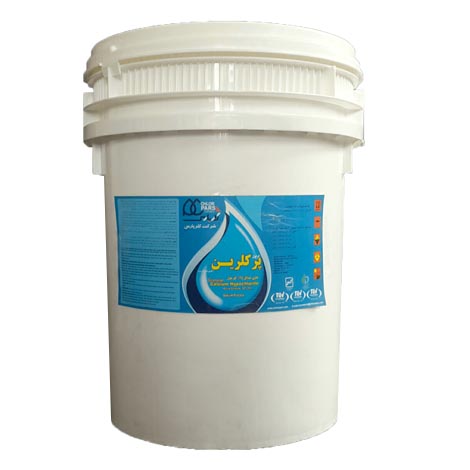
Persian Calcium Hypochlorite 30Kg
Calcium oxychlorides
A confusion sometimes reigns between calcium oxychlorides and calcium hypochlorite. Indeed, the name calcium oxychloride (or calcium hydroxychloride) does not immediately refer to calcium hypochlorite, but is only applicable to the mixed calcium basic chloride compounds remaining unreacted in the bleaching powder, such as, e.g. CaCl2 · 2 Ca(OH)2.
Calcium oxychloride may also be formed in concrete in roads and bridges when calcium chloride is used as deicing agent during winter. Calcium chloride then reacts with calcium hydroxide (portlandite) present in cement hydration products and forms a deleterious expanding phase also named CAOXY (abbreviation for calcium oxychloride) by concrete technologists. The stress induced into concrete by crystallisation pressure and CAOXY salt expansion can considerably reduce the strength of concrete.
Chemical properties
Calcium hypochlorite exhibits both acido-basic and oxydo-reduction properties. It is a relatively strong base.
Calcium hypochlorite solution is basic as the hypochlorite anion can accept a proton from a water molecule leaving a hydroxyُl anion in solution. This basicity is due to the propensity for the hypochlorite anion to accept a proton to become hypochlorous acid, a weak acid:
- ClO− + H2O ↔ HClO + OH−
The hypochlorite anion is also a strong oxidizing agent containing a chlorine atom at the valence I (redox state: Cl+1) which reacts under acidic conditions with the reduced chloride species (Cl–, here the reducing agent) present in hydrochloric acid to form calcium chloride, water and gaseous chlorine. The overall reaction is:
- Ca(ClO)2 + 4 HCl → CaCl2 + 2 H2O + 2 Cl2
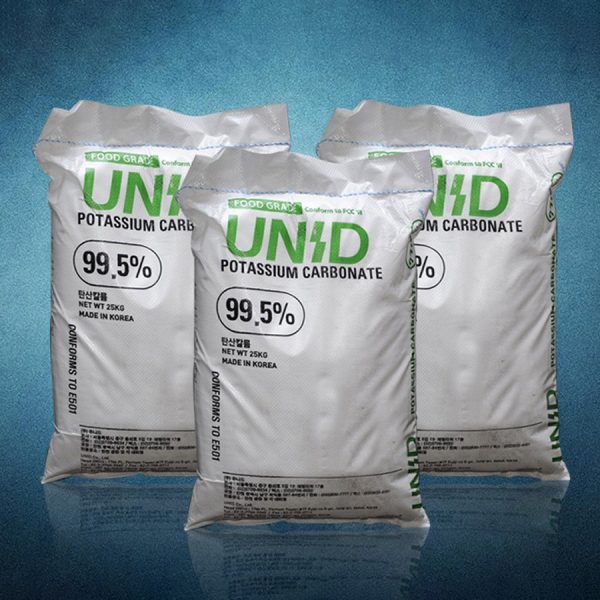

Powdered acetic acid
Citric acid It occurs naturally in citrus fruits. In biochemistry, it is an intermediate in the citric acid cycle, which occurs in the metabolism of all aerobic organisms.
More than two million tons of citric acid are manufactured every year. It is used widely as an acidifier, as a flavoring and a chelating agent.
A citrate is a derivative of citric acid; that is, the salts, esters, and the polyatomic anion found in solution. An example of the former, a salt is trisodium citrate; an ester is triethyl citrate. When part of a salt
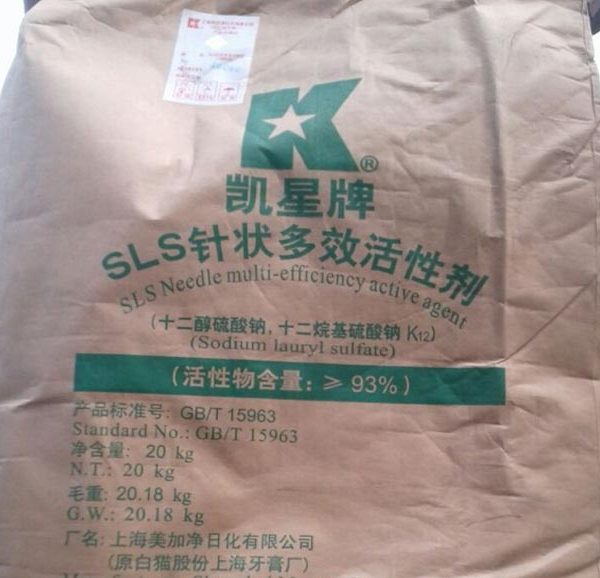
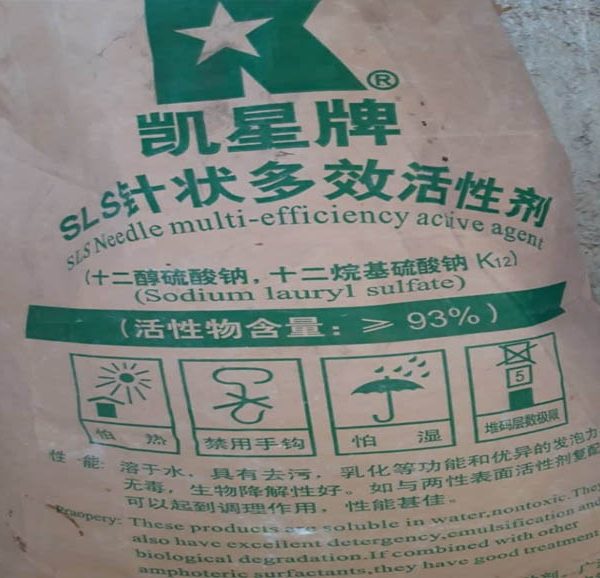
Sodium laureth sulfate sls
Sodium laureth sulfate (SLES), an accepted contraction of sodium lauryl ether sulfate (SLES), is an anionic detergent and surfactant found in many personal care products (soaps, shampoos, toothpaste, etc.). SLES is an inexpensive and very effective foaming agent.[1] SLES, sodium lauryl sulfate (SLS), ammonium lauryl sulfate (ALS), and sodium pareth sulfate are surfactants that are used in many cosmetic products for their cleaning and emulsifying properties. It is derived from palm kernel oil or coconut oil.
Its chemical formula is CH3(CH2)11(OCH2CH2)nOSO3Na. Sometimes the number represented by n is specified in the name, for example laureth-2 sulfate. The product is heterogeneous in the number of ethoxyl groups, where n is the mean. Laureth-3 sulfate is common in commercial products.
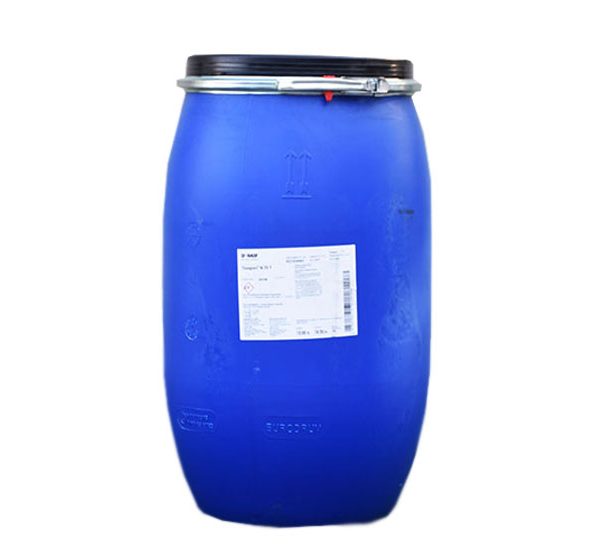
Texas Shellfish 60 kg
Sodium lauryl ether sulfate is commercially known as Texapone and belongs to the aclyl ether sulfate family. This product is a mixture of a fatty alcohol such as coconut oil with ethylene oxide and sulfonation after it.
Texapone Types:
Texapone is available in two forms of N70 and scale.
Scale Texapone has a lower purity and is used in scale and dark detergents like shampoos.
The paste-like Texapone N70 is also of a high-viscosity and is used to produce transparent detergent liquids.
It has a small amount of salt and, when diluted in water, has normal concentration and low viscosity.
When sodium chloride and alkanol amide is added to it, its viscosity is adjusted.






Reviews
There are no reviews yet.